Alert adjudication and case management sit at the centre of effective compliance operations. Screening and monitoring systems may generate alerts, but regulatory risk is ultimately determined by how those alerts are reviewed, escalated, and resolved.
This use case explains how compliance teams adjudicate alerts and manage cases in practice, the operational challenges teams face, and how structured decision workflows support consistency, governance, and audit readiness.
The Operational Challenge With Alert Resolution
As alert volumes increase, compliance teams often struggle to maintain consistent decision quality. Manual processes, fragmented tools, and unclear escalation paths can result in delays, inconsistent outcomes, and limited management oversight.
Common challenges include:
Inconsistent decisions across similar alerts
Limited visibility into alert status and outcomes
Weak documentation of decision rationale
Difficulty evidencing controls during regulatory reviews
Regulatory Expectations For Alert Adjudication And Governance
Regulators expect firms to maintain effective systems and controls around alert handling, escalation, and decisioning. In the UK, the Financial Conduct Authority requires firms to establish robust systems and controls, clear accountability, and appropriate management oversight.
These expectations extend to the ability to evidence how alerts are resolved, how decisions are reviewed, and how governance is applied across the alert lifecycle.
How Alert Adjudication And Case Management Work In Practice
Effective alert adjudication focuses on structured workflows rather than ad hoc decisioning.
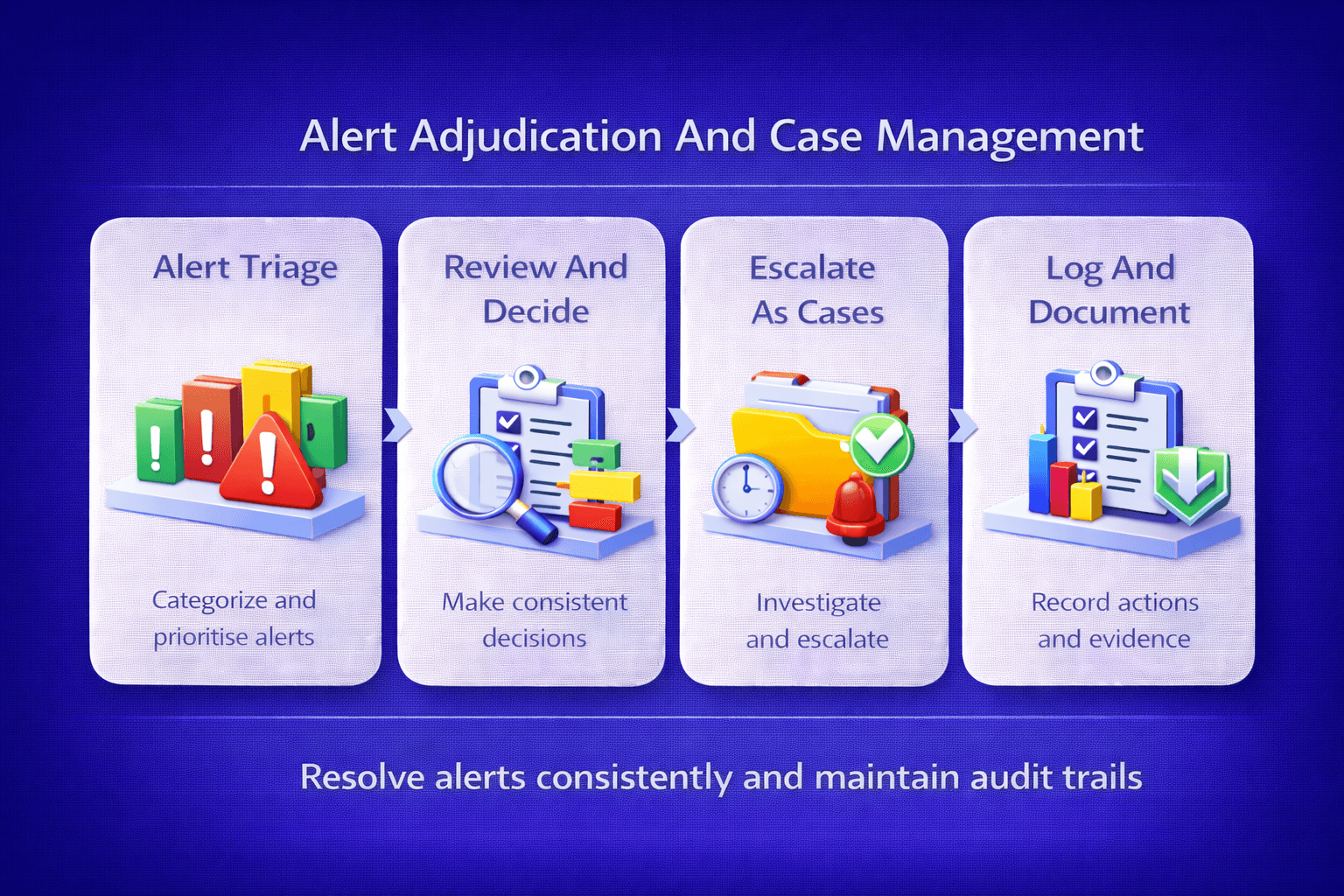
Alert Triage And Prioritisation
Alerts are categorised and prioritised based on risk, ensuring that higher-risk cases receive appropriate attention without delaying lower-risk resolutions.
Structured Review And Decisioning
Analysts assess alerts using defined criteria, supporting evidence-based decisions that are consistent across teams.
Escalation And Case Handling
Alerts that require further investigation are escalated into cases with clear ownership, timelines, and documentation.
Audit Trail And Oversight
All actions, decisions, and supporting evidence are logged, creating a complete audit trail for internal review and regulatory examination.
How Facctum Supports Alert Adjudication
Facctum supports structured alert adjudication through Alert Adjudication, providing transparent workflows and consistent decisioning.
Alerts originating from Customer Screening, Payment Screening, and Ongoing Monitoring can be reviewed within a single environment, improving efficiency and governance.
Business And Compliance Outcomes
Organisations that implement structured alert adjudication and case management typically achieve:
Faster and more consistent alert resolution
Improved audit readiness and traceability
Stronger management oversight
Increased regulatory confidence in decisioning controls
Related Use Cases
Alert adjudication underpins wider compliance workflows, including Compliance Quality Assurance And Oversight and Watchlist Delta Management.
See Alert Adjudication In Action
If you want to see how structured alert adjudication can improve decision consistency and governance, Facctum’s specialists can demonstrate real-world workflows.
Speak To A Compliance Specialist to request a demonstration or discuss your alert handling challenges.