
Sanctions Data Management
Sanctions Data Management
Financial institutions rely on accurate and up to date sanctions data to screen customers and transactions effectively. Sanctions lists change frequently as regulators update designations, add new entities, and modify identifying information. Without reliable data management processes, screening systems may operate on outdated or incomplete information, increasing compliance risk. Sanctions data management solutions help organisations maintain a centralised watchlist repository, automate list ingestion, and ensure screening systems always use the most current regulatory data. By improving the way sanctions lists are managed and distributed across screening systems, financial institutions can strengthen compliance controls while improving operational efficiency.
Why Sanctions Data Management Is Critical for Compliance
Why Sanctions Data Management Is Critical for Compliance
Sanctions screening accuracy depends heavily on the quality and timeliness of the underlying watchlist data. Financial institutions must manage multiple global sanctions sources, including regulatory authorities, government lists, and internal datasets.
Without structured data management processes, organisations may struggle to maintain reliable screening operations.
Sanctions screening accuracy depends heavily on the quality and timeliness of the underlying watchlist data. Financial institutions must manage multiple global sanctions sources, including regulatory authorities, government lists, and internal datasets.
Without structured data management processes, organisations may struggle to maintain reliable screening operations.
Sanctions screening accuracy depends heavily on the quality and timeliness of the underlying watchlist data. Financial institutions must manage multiple global sanctions sources, including regulatory authorities, government lists, and internal datasets.
Without structured data management processes, organisations may struggle to maintain reliable screening operations.
Frequent Regulatory Updates
Sanctions authorities regularly update designated entities, aliases, and identifying information. Financial institutions must ensure screening systems reflect these updates immediately.
Frequent Regulatory Updates
Sanctions authorities regularly update designated entities, aliases, and identifying information. Financial institutions must ensure screening systems reflect these updates immediately.
Frequent Regulatory Updates
Sanctions authorities regularly update designated entities, aliases, and identifying information. Financial institutions must ensure screening systems reflect these updates immediately.
Multiple Watchlist Sources
Organisations often rely on numerous sanctions lists, PEP datasets, and internal risk lists. Managing these sources manually can introduce inconsistencies and delays.
Multiple Watchlist Sources
Organisations often rely on numerous sanctions lists, PEP datasets, and internal risk lists. Managing these sources manually can introduce inconsistencies and delays.
Multiple Watchlist Sources
Organisations often rely on numerous sanctions lists, PEP datasets, and internal risk lists. Managing these sources manually can introduce inconsistencies and delays.
Data Format Inconsistencies
Sanctions lists are published in different formats and structures. Without proper normalisation and ingestion processes, this data may be difficult to integrate into screening systems.
Real-Time Payment Pressure
Sanctions lists are published in different formats and structures. Without proper normalisation and ingestion processes, this data may be difficult to integrate into screening systems.
Real-Time Payment Pressure
Sanctions lists are published in different formats and structures. Without proper normalisation and ingestion processes, this data may be difficult to integrate into screening systems.
Operational Complexity
Regulatory Complexity
Regulatory Complexity
Maintaining watchlists across multiple screening systems can create operational inefficiencies and increase the risk of outdated data being used during screening.
Maintaining watchlists across multiple screening systems can create operational inefficiencies and increase the risk of outdated data being used during screening.

Key Risks Addressed by Sanctions Data Management
Key Risks Addressed by Sanctions Data Management
Key Risks Addressed by Sanctions Data Management
Effective sanctions data management helps financial institutions reduce operational and regulatory risks associated with screening processes.
Effective sanctions data management helps financial institutions reduce operational and regulatory risks associated with screening processes.

Delayed watchlist updates can lead to customers or transactions being screened against outdated sanctions information.
Delayed watchlist updates can lead to customers or transactions being screened against outdated sanctions information.
Delayed watchlist updates can lead to customers or transactions being screened against outdated sanctions information.

Multiple screening environments may use different versions of sanctions lists if data distribution is not properly controlled.
Multiple screening environments may use different versions of sanctions lists if data distribution is not properly controlled.
Multiple screening environments may use different versions of sanctions lists if data distribution is not properly controlled.

Improperly formatted watchlist data can cause screening engines to miss relevant matches or generate unnecessary alerts.
Improperly formatted watchlist data can cause screening engines to miss relevant matches or generate unnecessary alerts.

Regulators expect institutions to demonstrate how sanctions data is managed, updated, and distributed across compliance systems.
Regulators expect institutions to demonstrate how sanctions data is managed, updated, and distributed across compliance systems.
Core Capabilities for Managing Sanctions Data
Core Capabilities for Managing Sanctions Data
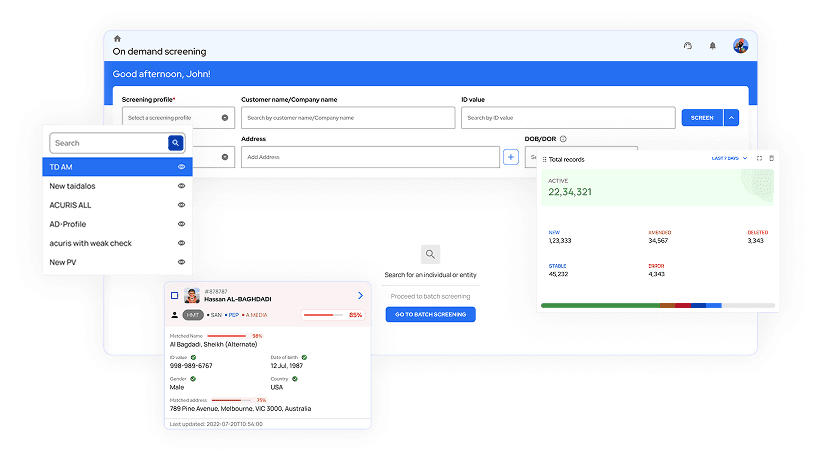
Facctum’s watchlist management solution provides tools to manage sanctions data efficiently and distribute it across screening systems.
Facctum’s watchlist management solution provides tools to manage sanctions data efficiently and distribute it across screening systems.

Centralised Watchlist Repository
Facctum provides a unified repository where organisations can store and manage sanctions lists, PEP databases, and other regulatory datasets.
Centralised Watchlist Repository
Facctum provides a unified repository where organisations can store and manage sanctions lists, PEP databases, and other regulatory datasets.
Centralised Watchlist Repository
Facctum provides a unified repository where organisations can store and manage sanctions lists, PEP databases, and other regulatory datasets.

Automated List Ingestion
Automated ingestion pipelines allow financial institutions to import sanctions updates from regulatory sources quickly and consistently.
Automated List Ingestion
Automated ingestion pipelines allow financial institutions to import sanctions updates from regulatory sources quickly and consistently.
Automated List Ingestion
Automated ingestion pipelines allow financial institutions to import sanctions updates from regulatory sources quickly and consistently.

Real Time Watchlist Updates
Automated update processes ensure screening systems receive the latest sanctions data as soon as it becomes available.
Real Time Watchlist Updates
Automated update processes ensure screening systems receive the latest sanctions data as soon as it becomes available.
Real Time Watchlist Updates
Automated update processes ensure screening systems receive the latest sanctions data as soon as it becomes available.

Segmented Screening Lists
Institutions can create tailored screening lists for specific use cases, allowing screening profiles to focus on relevant datasets.
Segmented Screening Lists
Institutions can create tailored screening lists for specific use cases, allowing screening profiles to focus on relevant datasets.
Segmented Screening Lists
Institutions can create tailored screening lists for specific use cases, allowing screening profiles to focus on relevant datasets.
Transparent Data Governance
Audit logs and data tracking allow institutions to demonstrate how sanctions data is managed and updated within their compliance infrastructure.
Transparent Data Governance
Audit logs and data tracking allow institutions to demonstrate how sanctions data is managed and updated within their compliance infrastructure.
Transparent Data Governance
Audit logs and data tracking allow institutions to demonstrate how sanctions data is managed and updated within their compliance infrastructure.

Improved Screening Accuracy
Accurate and well maintained watchlists improve match quality and reduce unnecessary alerts.
Accurate and well maintained watchlists improve match quality and reduce unnecessary alerts.
Faster Regulatory Updates
Automated ingestion ensures sanctions updates are reflected in screening systems quickly.
Automated ingestion ensures sanctions updates are reflected in screening systems quickly.
Operational Efficiency
Centralised watchlist management simplifies the process of maintaining multiple regulatory datasets.
Centralised watchlist management simplifies the process of maintaining multiple regulatory datasets.
Stronger Compliance Governance
Clear data management processes help organisations demonstrate effective sanctions controls during regulatory reviews.
Clear data management processes help organisations demonstrate effective sanctions controls during regulatory reviews.
Why Financial Institutions Prioritise Sanctions Data Management
Why Financial Institutions Prioritise Sanctions Data Management
Reliable sanctions data management strengthens both compliance accuracy and operational efficiency.
Reliable sanctions data management strengthens both compliance accuracy and operational efficiency.
Why Leading Financial Institutions Trust Facctum
Why Leading Banks
Trust Facctum
Modern AML compliance requires more than isolated screening checks. Facctum provides financial institutions with the speed, reliability, and scale required to operate effective financial crime controls while maintaining regulatory readiness.
Modern AML compliance requires more than isolated screening checks. Facctum provides financial institutions with the speed, reliability, and scale required to operate effective financial crime controls while maintaining regulatory readiness.
ms
<80
Real-time results
Ultra Fast Screening
Facctum delivers real-time screening results in under 80 milliseconds. Whether processing SWIFT, SEPA Instant, or ISO 20022 payment messages, screening occurs instantly without slowing operational workflows.
Enterprise Grade Reliability
With 99.9 percent uptime, Facctum ensures compliance operations remain available even during peak transaction volumes. Compliance teams can maintain continuous screening and investigation workflows without interruption.
With 99.9 percent uptime, Facctum ensures compliance operations remain available even during peak transaction volumes. Compliance teams can maintain continuous screening and investigation workflows without interruption.
%
99.9
Always-on uptime
min
<5
Instant list updates
Continuous Compliance
Continuous Compliance
Regulatory watchlists are refreshed in under five minutes, ensuring screening systems always operate using the latest sanctions and compliance data.
Regulatory watchlists are refreshed in under five minutes, ensuring screening systems always operate using the latest sanctions and compliance data.
Scalable Infrastructure
Scalable Infrastructure
Facctum supports screening and watchlist management across millions of records. As financial institutions grow, the platform scales to support increasing screening volumes without compromising performance.
Facctum supports screening and watchlist management across millions of records. As financial institutions grow, the platform scales to support increasing screening volumes without compromising performance.
+
5M
Scalable watchlist records
Trusted by Compliance Teams Managing Financial Crime Risk
Trusted by Compliance Teams Managing Financial Crime Risk
Compliance teams depend on accurate sanctions data to monitor customers and transactions against global regulatory lists.
=
Compliance teams depend on accurate sanctions data to monitor customers and transactions against global regulatory lists.
=




Organisations use sanctions data management solutions to:
Maintain centralised sanctions list repositories
Automate watchlist ingestion and updates
Distribute regulatory datasets across screening systems
Support accurate customer and payment screening
Frequently Asked Questions
Frequently Asked Questions
Can Facctum handle real-time payment flows like SEPA Instant and SWIFT?
Is it suitable for greenfield neobanks?
Do you support jurisdiction-specific rules?
Can I replace or work alongside legacy systems?
What Is AML Compliance For Banks?
Show More
Can Facctum handle real-time payment flows like SEPA Instant and SWIFT?
Is it suitable for greenfield neobanks?
Do you support jurisdiction-specific rules?
Can I replace or work alongside legacy systems?
What Is AML Compliance For Banks?
Show More
Can Facctum handle real-time payment flows like SEPA Instant and SWIFT?
Is it suitable for greenfield neobanks?
Do you support jurisdiction-specific rules?
Can I replace or work alongside legacy systems?
What Is AML Compliance For Banks?
Show More

Strengthen Your Sanctions Screening Data
Facctum’s watchlist management platform helps financial institutions maintain accurate sanctions data, automate list updates, and support reliable screening operations.
Request a Demo
Strengthen Your Sanctions Screening Data
Facctum’s watchlist management platform helps financial institutions maintain accurate sanctions data, automate list updates, and support reliable screening operations.
Request a Demo

Solutions
Industries


Solutions
Solutions
Industries

Solutions
Industries
Solutions
Industries