
Modern AML operations rely on seamless collaboration between alert adjudication and case management systems. While alert adjudication determines whether a screening alert is genuine or false, case management tools handle the deeper investigation, escalation, and reporting processes. Facctum focuses on the adjudication layer but integrates efficiently with third-party case management platforms to deliver a complete compliance workflow.
Why Integration Between Adjudication and Case Management Matters
Financial institutions often run multiple systems for sanctions, payments, and transaction monitoring. Without integration, alerts can be lost or duplicated, creating inefficiencies and compliance risks. By ensuring alert adjudication outputs flow directly into case management systems, compliance teams gain transparency, faster investigations, and an auditable path from detection to resolution.
Core Definitions and Scope
To understand how these functions connect, it helps to define their roles clearly.
What is Alert Adjudication?
Alert adjudication is the process of reviewing and dispositioning alerts generated by screening systems such as customer screening or payment screening. Analysts verify matches, apply decision logic, and document justifications for each outcome. Learn more about this capability on the alert adjudication page.
What is Case Management?
Case management refers to external investigative systems that collect and track escalated alerts. They provide task assignment, documentation, evidence storage, and audit trails for compliance reviews. While Facctum does not provide this function, our adjudication platform integrates with these systems through APIs and workflow connectors.
How Integration Improves Compliance Efficiency
Connecting alert adjudication with case management enables end-to-end visibility. Each alert can be traced from initial screening through escalation, investigation, and closure. This integration also ensures consistency between operational and reporting data, supporting regulatory expectations for documentation and traceability.
Key Workflow Steps in the Integration Process
The integration typically follows a structured workflow.
Each step improves efficiency and reduces risk;
Alert generation: Alerts are produced by customer screening or payment screening processes.
Adjudication: Reviewers assess and disposition alerts in the adjudication interface.
Escalation: Alerts requiring further investigation are transferred automatically to the case management system.
Investigation: Investigators review evidence, gather data, and collaborate across teams.
Closure and reporting: Final outcomes and regulatory reports are documented for audit.
This workflow ensures all activities are recorded and available for audit, meeting standards outlined by regulators such as the Financial Action Task Force (FATF) and UK Financial Conduct Authority (FCA).
Integration Benefits and Outcomes
A well-implemented integration between adjudication and case management brings tangible operational and compliance benefits.
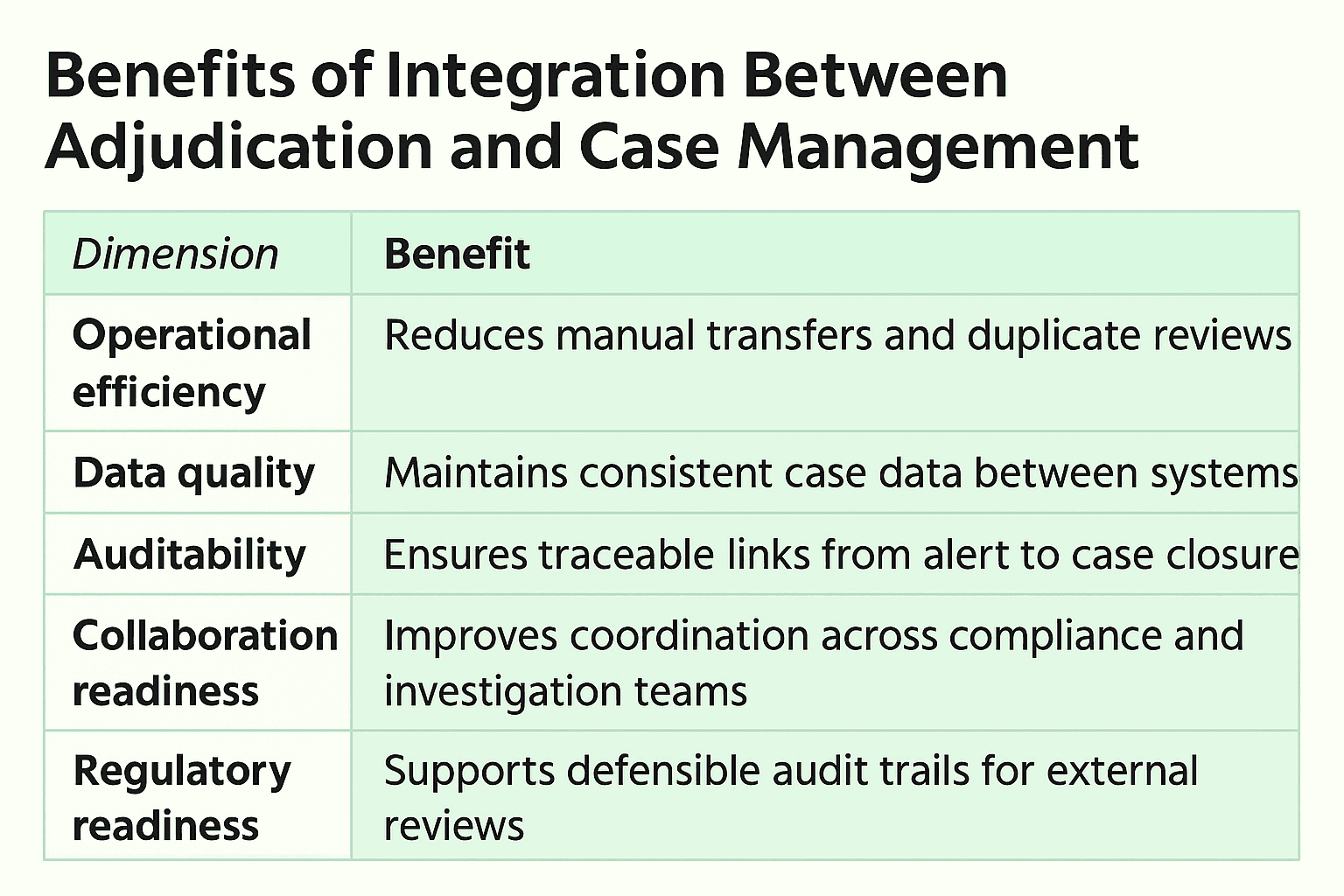
These outcomes help organisations meet regulatory expectations and strengthen their control frameworks.
Technical Integration Considerations
When designing an integration between adjudication and case management systems, technical and governance factors must be considered. Teams should ensure that APIs support secure data exchange, audit fields are preserved during transfers, and error handling is clearly defined.
Policy Expectations and External Guidance
Regulators require complete visibility over how alerts progress through the compliance process. The FATF’s Forty Recommendations and the U.S. Treasury’s OFAC compliance resources outline expectations for documentation and escalation. Similarly, the FCA provides practical guidance on financial crime systems and controls, supporting the importance of integrated alert handling.
Practical Examples of Integration Scenarios
A bank using real-time payment screening may clear 95% of alerts at the adjudication stage. The remaining 5% that require escalation are pushed automatically into the case management system. Investigators then enrich cases with supporting documents and transaction data. Integration ensures both systems share consistent records, reducing redundancy and improving decision speed.
Summary and Next Steps
Integrating alert adjudication with external case management tools enables compliance teams to operate efficiently, document decisions clearly, and meet audit standards.
Organisations can start by mapping current alert workflows, identifying integration gaps, and connecting with technology teams through the contact page to discuss implementation best practices.
What Is Sanctions Screening In AML Compliance?
What Is Alert Adjudication And How Does It Extend The Screening Process?
How Do Sanctions Screening And Alert Adjudication Work Together In The Detection To Decision Workflow?
Why Is This Combined Workflow Critical For AML Compliance?
When Does Sanctions Screening Take Place?
When Does Alert Adjudication Occur?
What Risks Arise If Sanctions Screening Is Weak?
What Risks Arise If Alert Adjudication Is Poorly Managed?
How Does Data Quality Affect Screening And Adjudication?
How Can Firms Strengthen The Detection To Decision Workflow?