AML Compliance

Sanctions screening systems depend heavily on the quality of the data they analyse. While matching algorithms and screening engines receive significant attention in compliance programmes, the underlying watchlist data often determines whether a system produces meaningful alerts or overwhelming operational noise.
Watchlists contain the sanctioned individuals, entities, and jurisdictions that screening systems must detect. If this data is incomplete, inconsistent, duplicated, or poorly structured, the screening system will struggle to identify genuine matches accurately. This can lead to excessive false positives, missed risks, and inefficient investigation workflows.
For compliance teams, watchlist data quality is therefore not simply a technical concern. It is a core component of effective financial crime controls and a key factor in the overall performance of sanctions screening systems.
This guide explains why watchlist data quality matters, how poor data affects screening outcomes, and how organisations can improve list governance to strengthen detection capabilities.
Why Watchlist Data Quality Is Critical For Screening Accuracy
Sanctions screening systems operate by comparing customer or transaction attributes against records in regulatory watchlists. These lists originate from authorities such as national governments, international organisations, and financial regulators.
Because sanctions lists are created by different organisations with different formats and data standards, the information contained in them can vary significantly. Some records may include detailed identifying information, while others may contain only a name and limited contextual details.
Regulators expect institutions to maintain effective screening controls based on reliable data. Authoritative sanctions lists are published by multiple regulators. For example, financial institutions often screen against the UK consolidated sanctions list and the OFAC Specially Designated Nationals (SDN) list data formats, which provide structured sanctions data used by screening systems around the world. In Europe, organisations may also reference the European Union sanctions database, which consolidates sanctions measures and designated entities across EU regulations.
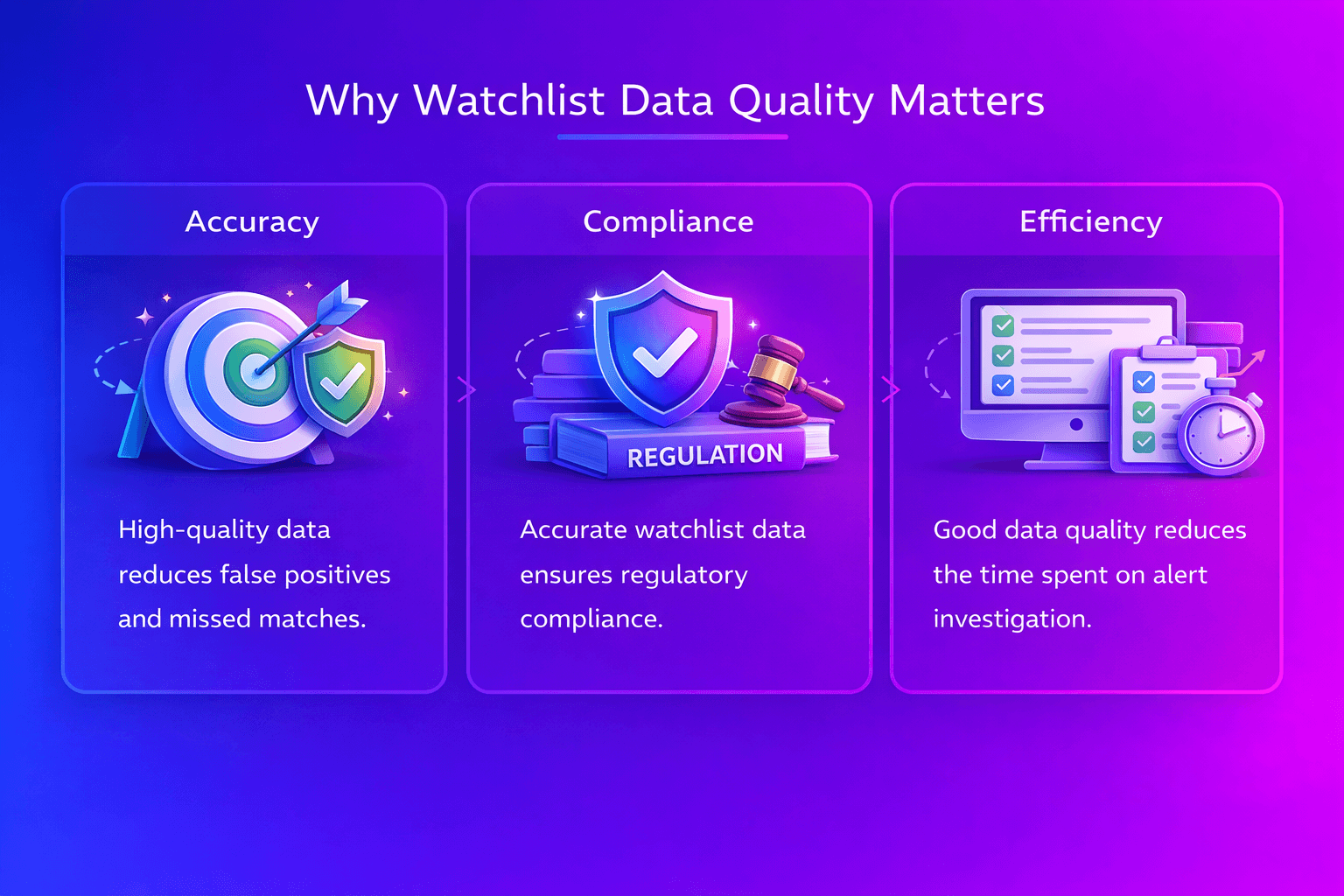
If watchlist data is poorly structured or inconsistent, screening engines must rely heavily on approximate name matching. This significantly increases the likelihood of false positives and can reduce overall detection accuracy.
Where Watchlist Data Appears In The Screening Pipeline
To understand the importance of data quality, it helps to examine how watchlists fit within the broader sanctions screening workflow.
Most screening environments follow a similar sequence of stages.
Watchlist Ingestion
Sanctions lists are collected from authoritative sources and imported into the organisation's screening infrastructure. These lists may include sanctions records, politically exposed persons, or adverse media entities.
Many organisations centralise this process through structured watchlist management platforms that consolidate multiple regulatory feeds into a single controlled repository.
Screening Evaluation
Once watchlists are prepared, screening engines compare customer or transaction attributes against those records. Systems such as modern customer screening solutions evaluate similarities across attributes such as names, dates of birth, and nationalities.
Alert Generation
If a similarity score exceeds a configured threshold, the system generates an alert for investigation.
Investigation And Decision
Compliance analysts review alerts using investigation environments such as alert adjudication workflows that help investigators compare identifying attributes and document their decisions.
At each stage of this process, the quality of the watchlist data directly influences the reliability of screening outcomes.
How Poor Watchlist Data Creates False Positives
One of the most visible consequences of poor data quality is the generation of excessive false positives.
False positives occur when a screening system identifies a similarity between a customer and a watchlist record even though they are not the same person or entity.
Several data quality issues contribute to this problem.
Duplicate Records
The same sanctioned individual may appear on multiple lists with slightly different spellings or formats. If these records are not deduplicated, the screening system may generate multiple alerts for the same individual.
Inconsistent Formatting
Different list providers may use different formatting conventions for names, dates, or addresses. Inconsistent formatting can affect how screening engines interpret the data.
Missing Identifiers
Some watchlist records contain limited identifying information. Without attributes such as date of birth, passport numbers, or addresses, screening systems must rely primarily on name matching.
Alias Variations
Sanctioned individuals may have multiple aliases or transliteration variations. If these aliases are not structured properly within the list data, the screening system may struggle to detect genuine matches.
Improving data quality significantly reduces these problems and improves screening accuracy.
How High Quality Watchlists Improve Detection
When watchlist data is well structured and enriched, screening engines can evaluate more attributes when determining potential matches.
High quality watchlist data typically includes:
• Standardised name formats
• Structured alias fields
• Dates of birth
• Nationality information
• Identification numbers
• Addresses
With additional attributes available, screening engines can apply more precise matching logic. This allows systems to reduce unnecessary alerts while still detecting genuine sanctions exposure.
High quality data therefore improves both operational efficiency and risk detection.
Key Data Governance Practices For Watchlists
Organisations that maintain strong screening performance typically implement structured watchlist governance processes.
Automated List Updates
Sanctions lists change frequently as new individuals or entities are added. Automated ingestion processes ensure updates are applied quickly and consistently.
Data Normalisation
Normalisation ensures that data from different sources follows consistent formatting conventions. This allows screening engines to compare attributes accurately.
Deduplication
Duplicate records should be identified and consolidated so that the screening engine does not generate multiple alerts for the same entity.
Data Enrichment
Where possible, additional identifying attributes can be added to watchlist records to improve match accuracy.
These practices strengthen the reliability of screening systems.
Common Watchlist Data Problems Found During Audits
Sanctions screening audits often identify recurring data quality issues.
Delayed List Updates
If list updates are applied manually or infrequently, screening systems may operate on outdated sanctions information.
Inconsistent Data Structures
Different sanctions lists may use different field structures or naming conventions.
Unstructured Alias Fields
Aliases that are not properly structured may reduce the effectiveness of fuzzy matching algorithms.
Lack Of Data Governance Ownership
Without clear ownership of watchlist data governance, data quality issues can accumulate over time.
Identifying and resolving these issues significantly improves screening reliability.
Professional Insight And Operational Confidence
Sanctions screening performance is rarely determined by technology alone. In practice, the reliability of screening controls depends on how well organisations manage data governance, configure screening engines, and train investigators to interpret alerts consistently. Strong oversight of these areas helps compliance teams ensure that screening results remain meaningful, operationally manageable, and defensible during regulatory reviews.
Practical Experience
Compliance practitioners often discover that screening performance improves dramatically once watchlist data quality is addressed. Even advanced screening engines struggle when underlying data is inconsistent.
Technical And Regulatory Expertise
Maintaining reliable watchlist data requires both technical data management capabilities and regulatory awareness of sanctions obligations.
Building Confidence In Controls
When watchlist data is well governed and screening systems operate on accurate information, organisations gain confidence that sanctions controls are functioning effectively.
People First Compliance Content
Financial crime compliance ultimately depends on the judgement of investigators, analysts, and risk professionals who interpret screening alerts and make decisions about potential matches.
Technology can support this process, but the strength of screening controls depends heavily on the quality of the underlying data.
Educational resources like this aim to support compliance professionals by explaining how data governance decisions affect real world compliance operations.
Next Steps For Your Organisation
Improving watchlist data quality can significantly strengthen sanctions screening performance. Many organisations discover that relatively small improvements in data governance reduce false positives and improve detection capability.
If your organisation is reviewing its sanctions screening architecture, explore how your watchlist governance processes compare with current industry practices.