AML Compliance

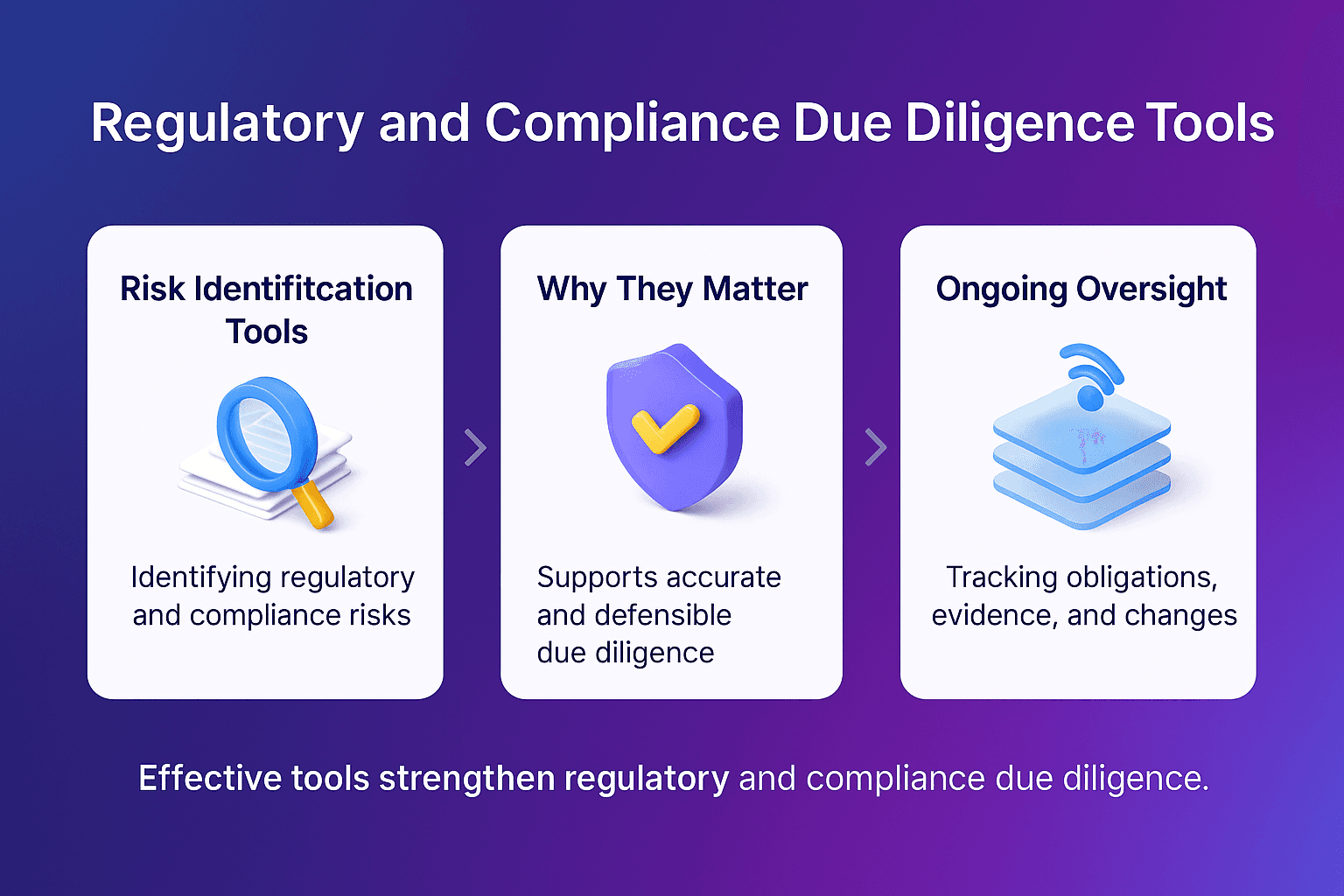
Regulatory and compliance due diligence is not supported by a single tool or dataset. In practice, compliance teams rely on a structured combination of technology platforms, data sources, internal governance controls, and external regulatory references to assess risk, support decisions, and demonstrate oversight during supervisory review.
This article explains the tools and resources most commonly used for regulatory and compliance due diligence, focusing on how they are applied in real operating environments rather than how they are described in vendor material. The emphasis is on practical use, governance, and audit defensibility.
Why Due Diligence Requires More Than One Tool
Due diligence spans onboarding, ongoing review, investigation, and periodic reassessment. Each stage places different demands on data quality, decision timing, and documentation.
As a result, mature compliance programmes rarely rely on a single platform. Instead, they combine multiple tool types that together support prevention, detection, investigation, and governance. Effectiveness depends less on individual components and more on how consistently they operate as a connected system.
Screening And Monitoring Technology
Screening and monitoring platforms form the operational foundation of most due diligence frameworks. These technologies support both initial onboarding checks and ongoing oversight by helping teams identify known risk indicators and detect unusual behaviour that requires further assessment.
Customer screening tools are typically applied during onboarding and periodic review to assess exposure to sanctions, politically exposed persons, or other defined risk categories. Payment and transaction monitoring tools operate on an ongoing basis, analysing activity patterns to identify behaviour that deviates from expected norms.
To manage these processes consistently, many institutions rely on integrated financial crime compliance platforms such as Facctum, which link screening, monitoring, and investigation within a single operating model. This approach helps ensure consistent decisioning and a clear audit trail across the customer lifecycle.
Data Sources That Support Due Diligence Decisions
Technology platforms depend on underlying data to function effectively. As a result, the quality and governance of information sources play a critical role in due diligence outcomes.
Common data resources include sanctions and regulatory lists, corporate registries, beneficial ownership records, and adverse media feeds. These datasets are often maintained by third parties and require structured ingestion, version control, and update review to avoid volatility and inconsistency.
In practice, many false positives and missed risks can be traced back to poorly governed data updates rather than to weaknesses in detection logic.
Investigation And Case Management Tools
Once potential risk is identified, investigation tools support structured review and decision making. Effective investigation workflows, including structured alert adjudication, help ensure outcomes are explainable and defensible. Case management systems allow analysts to assess alerts, document findings, and record outcomes in a consistent manner.
Well designed investigation workflows help ensure decisions are explainable and repeatable. They also provide the evidence required for quality assurance, internal audit, and regulatory review.
Without effective case management, even strong detection controls can become difficult to defend.
Governance And Control Management Resources
Beyond detection and investigation, due diligence relies on governance tools that demonstrate oversight and accountability. These include configuration management, change logs, escalation records, and policy documentation.
Such resources help organisations show that controls are maintained in line with documented procedures and that changes are reviewed and approved appropriately. During supervisory review, these materials are often as important as detection outcomes themselves.
External Regulatory And Industry References
Compliance teams also rely on external resources to interpret expectations and assess emerging risks. Guidance from bodies such as the Financial Action Task Force on the risk-based approach to combating money laundering and terrorist financing - high level principles and procedures shapes how due diligence controls are designed and assessed.
These resources do not prescribe specific technologies, but they influence supervisory expectations around proportionality, documentation, and governance. Keeping them up to date helps ensure due diligence processes remain aligned with evolving standards.
How Due Diligence Tools Work Together In Practice
In a typical operating model, due diligence begins with screening at onboarding and continues through ongoing monitoring during the customer relationship. Organisations using integrated financial crime compliance platforms often link screening, monitoring, and investigation into a single operating model rather than managing disconnected tools. Alerts generated by these controls are reviewed through investigation workflows, with decisions documented and retained.
Data sources, governance controls, and external references inform each stage. When these elements are integrated effectively, teams are better able to manage volume, maintain consistency, and respond confidently to regulatory enquiries.
Common Weaknesses In Due Diligence Frameworks
Despite significant investment, organisations often encounter recurring issues such as high alert volumes, inconsistent decisions, and fragmented documentation. Supervisory commentary from authorities like the UK Financial Conduct Authority publications on financial crime controls frequently highlights governance and evidence gaps as root causes.
These weaknesses are frequently caused by unstable data inputs, limited transparency into monitoring logic, or disconnected investigation processes. Addressing them typically involves improving integration and governance rather than replacing tools outright.
How Teams Review And Improve Due Diligence Over Time
Effective due diligence frameworks evolve. Mature programmes regularly review alert outcomes, investigation quality, and control performance to ensure alignment with risk exposure.
Sampling, quality assurance, and periodic model review help teams identify weaknesses early and demonstrate continuous improvement. Over time, these practices strengthen both operational efficiency and regulatory confidence.
Final Reflections On Due Diligence Tooling
Regulatory and compliance due diligence is supported by an ecosystem of tools and resources rather than a single solution. Programmes that perform well over time focus on integration, governance, and evidential clarity.
By understanding how tools are used in practice, compliance teams can build frameworks that remain effective as risk profiles and regulatory expectations continue to evolve.