AML Compliance

Financial crime screening systems generate alerts when potential matches are detected between customers, transactions, and sanctions or risk lists. These alerts are only the starting point of the compliance process. The real risk decision occurs during adjudication, when investigators determine whether an alert represents a genuine financial crime exposure or a false positive.
For regulators, the strength of a financial crime programme is often judged by the quality of its investigation and decision making processes. A poorly structured adjudication process can lead to inconsistent outcomes, missed risks, or decisions that cannot be justified during regulatory reviews.
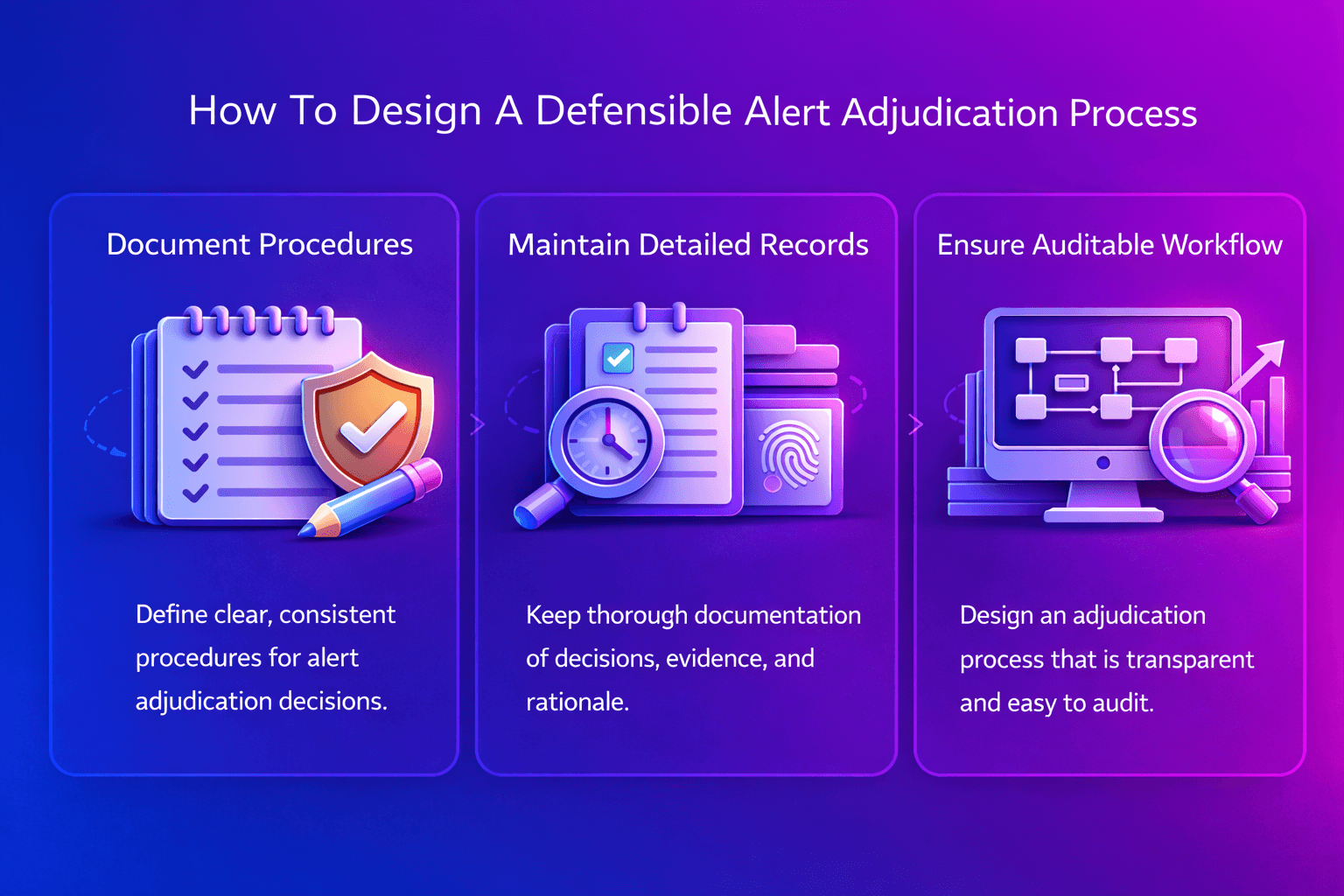
Designing a defensible alert adjudication process therefore becomes a critical requirement for compliance teams. A defensible process ensures that alerts are investigated consistently, evidence is documented properly, and risk decisions can be explained to regulators, auditors, and internal governance functions.
This guide explains how compliance teams design alert adjudication processes that are operationally effective, regulator ready, and capable of supporting large scale screening environments.
Why Alert Adjudication Matters In Financial Crime Compliance
Sanctions screening, customer screening, and transaction monitoring systems can generate very large volumes of alerts. Many of these alerts turn out to be unrelated to sanctioned individuals or suspicious activity, but each one still requires review.
The adjudication process determines how investigators assess these alerts and reach a final outcome. This stage is where compliance teams apply professional judgement, review supporting information, and determine whether escalation is required.
Regulators expect institutions to demonstrate that these decisions follow structured procedures. The Financial Action Task Force emphasises this expectation through its guidance on the risk based approach for the banking sector, which explains that financial crime controls should be proportionate, risk driven, and supported by clear governance and investigation processes.
When alert adjudication lacks structure, several problems emerge:
• inconsistent investigation outcomes
• unclear audit trails
• inefficient investigator workflows
• increased regulatory risk
A well designed adjudication framework ensures that alerts are handled in a consistent and transparent manner.
Where Alert Adjudication Fits In The Screening Lifecycle
Alert adjudication sits between the detection stage and the final compliance decision. Screening engines such as structured customer screening platforms generate alerts when potential matches are detected, but the investigation process determines whether the alert represents a real sanctions exposure.
To understand how adjudication should be designed, it helps to understand where it sits within the financial crime detection pipeline.
Most screening environments follow a similar operational sequence.
List Governance And Data Preparation
Sanctions lists and regulatory watchlists are collected from authoritative sources and standardised before screening occurs. Effective list governance ensures that screening engines operate on clean and deduplicated data.
Many institutions centralise this process using a structured watchlist management framework that consolidates sanctions feeds and prepares them for screening engines.
Screening And Alert Generation
Screening engines compare customer or transaction data against watchlist records. Matching algorithms evaluate similarities across attributes such as names, dates of birth, nationality, and addresses.
When a similarity threshold is exceeded, the system generates an alert requiring review.
Alert Adjudication
The adjudication stage is where investigators review the alert, analyse available evidence, and determine whether the match is genuine.
Structured investigation environments such as alert adjudication workflows allow investigators to document decisions, manage case workflows, and maintain audit trails.
Escalation Or Closure
After investigation, the alert is either cleared as a false positive or escalated for enhanced review and regulatory reporting if a genuine match is suspected.
Each stage of this pipeline contributes to the defensibility of the final decision.
Core Principles Of A Defensible Adjudication Process
A defensible adjudication process is built around several core principles that ensure decisions are consistent and evidence based.
Consistent Investigation Procedures
Investigators should follow a defined investigation methodology when reviewing alerts. This typically includes checking identifying attributes such as date of birth, nationality, address, and aliases against the watchlist record.
Consistency ensures that similar alerts are reviewed in the same way across investigators.
Structured Documentation
Every investigation should produce a clear record explaining the reasoning behind the final decision.
Documentation should include:
• attributes compared
• evidence reviewed
• reasoning behind the decision
• final outcome
A well documented investigation allows the organisation to demonstrate why an alert was cleared or escalated.
Clear Escalation Criteria
Not every investigator should make final escalation decisions independently. Many organisations define escalation thresholds where alerts must be reviewed by senior investigators or compliance officers.
This layered review process improves governance and reduces the risk of missed sanctions matches.
Key Components Of An Effective Alert Investigation Workflow
Compliance teams typically design adjudication workflows around several operational components.
Case Creation
When a screening system generates an alert, the alert is converted into a case that investigators can review within the investigation platform.
The case should contain all relevant screening data, including the matched watchlist record and the attributes used by the screening engine.
Evidence Review
Investigators review additional information about the customer or transaction. This may include identification documents, account information, corporate ownership details, or historical transaction activity.
Evidence review helps determine whether the screened entity is actually the same individual as the watchlist record.
Risk Assessment
Investigators assess whether the available evidence indicates a genuine match or whether the alert represents a false positive.
Risk assessment often considers contextual information such as geography, transaction behaviour, and historical customer data.
Decision Recording
Once the investigator reaches a conclusion, the decision is recorded within the case management system. Proper decision recording ensures that the investigation can be reviewed later by auditors or regulators.
Common Challenges In Alert Adjudication
Despite the importance of investigation processes, many organisations face challenges when implementing structured adjudication frameworks.
Investigator Inconsistency
Different investigators may interpret similar alerts differently if investigation procedures are not clearly defined.
Limited Investigation Data
Investigators sometimes lack sufficient information to confidently determine whether a match is genuine. This can slow investigations and create uncertainty.
High Alert Volumes
Large volumes of alerts can overwhelm investigation teams, reducing the time available to review each case carefully.
Weak Documentation
If investigators do not consistently document their reasoning, the organisation may struggle to demonstrate the defensibility of its decisions during audits.
What A Well Designed Adjudication Framework Looks Like
Organisations that operate effective investigation processes typically adopt structured adjudication frameworks that combine technology, governance, and investigator training.
Standardised Investigation Playbooks
Investigation playbooks define how alerts should be reviewed and which attributes must be checked before clearing or escalating a case.
These playbooks ensure that investigators apply consistent methods when assessing alerts.
Integrated Case Management Systems
Modern investigation environments provide investigators with a centralised interface for reviewing alerts, collecting evidence, and documenting decisions.
Centralised systems also allow compliance managers to monitor investigation activity and track investigator performance.
Quality Assurance Reviews
Many institutions implement quality assurance processes where a sample of investigated alerts is reviewed by senior compliance staff.
These reviews help ensure investigation standards remain consistent across the organisation.
Clear Governance Structures
Effective adjudication frameworks define who is responsible for reviewing alerts, who can escalate cases, and how investigation decisions are approved.
Governance structures help organisations demonstrate that compliance decisions follow defined authority structures.
Regulatory Expectations For Investigation Processes
Regulators increasingly focus on the quality of investigation processes during compliance reviews.
Authorities expect institutions to demonstrate that alerts are reviewed consistently and that investigation decisions are properly documented.
For example, the UK government’s guidance on financial sanctions implementation and compliance highlights the responsibility of institutions to apply sanctions controls and ensure potential matches are properly investigated before accounts or transactions proceed.
Institutions must therefore maintain investigation processes that can demonstrate clear reasoning and evidence behind each decision.
Leading Indicators Of Weak Adjudication Processes
Compliance teams should monitor investigation performance indicators that may signal weaknesses in the adjudication process.
Growing Investigation Backlogs
If alert queues continue to expand faster than investigators can review them, the adjudication process may lack sufficient resources or workflow efficiency.
Inconsistent Investigator Decisions
When different investigators reach different conclusions for similar alerts, investigation procedures may not be sufficiently standardised.
Poor Documentation Quality
Weak investigation documentation can create significant risk during regulatory inspections.
Escalation Bottlenecks
If escalation procedures require excessive approvals, investigators may struggle to close cases efficiently.
Monitoring these indicators allows organisations to improve investigation processes before regulatory concerns arise.
How Organisations Improve Alert Adjudication
Improving adjudication frameworks typically involves both operational and technological improvements.
Define Investigation Standards
Clear investigation procedures help investigators understand exactly what evidence should be reviewed before a decision is made.
Improve Case Management Workflows
Structured case management environments allow investigators to review alerts efficiently while maintaining strong documentation standards.
Introduce Investigation Quality Reviews
Quality review programmes allow senior investigators to identify patterns in investigation decisions and ensure consistent investigation standards.
Train Investigators Continuously
Financial crime risks evolve constantly. Ongoing training helps investigators stay aligned with regulatory expectations and emerging financial crime risks.
Professional Insight And Operational Confidence
The credibility of a financial crime programme often depends on the strength of its investigation process. Even highly sophisticated screening systems rely on investigators to interpret alerts and assess risk. When adjudication procedures are clearly defined and consistently applied, organisations can demonstrate that their decisions are evidence based, repeatable, and defensible during regulatory reviews or internal audits.
Practical Experience
Experienced compliance professionals understand that the credibility of a screening programme often depends on the strength of its investigation processes. Even the most advanced screening technology cannot compensate for weak adjudication practices.
Technical And Regulatory Expertise
Strong adjudication frameworks combine structured investigation workflows with regulatory knowledge and operational oversight.
Building Confidence In Controls
When investigation processes are well structured and consistently documented, organisations gain confidence that their screening decisions will withstand regulatory scrutiny.
People First Compliance Content
Financial crime prevention ultimately relies on the expertise of investigators who analyse alerts and apply professional judgement when assessing risk.
Technology can support investigators by organising information and highlighting potential matches, but final decisions still depend on human analysis and regulatory understanding.
Content like this aims to support compliance professionals by explaining how investigation processes can be strengthened and made more defensible.
Next Steps For Your Organisation
Designing a defensible alert adjudication process requires a combination of strong governance, structured investigation workflows, and effective screening infrastructure.
Many organisations find that reviewing their current investigation procedures reveals opportunities to improve consistency, documentation, and investigation efficiency.
If your organisation is evaluating improvements to its financial crime investigation framework, explore how your investigation processes compare with current industry practices.