Sanctions Screening

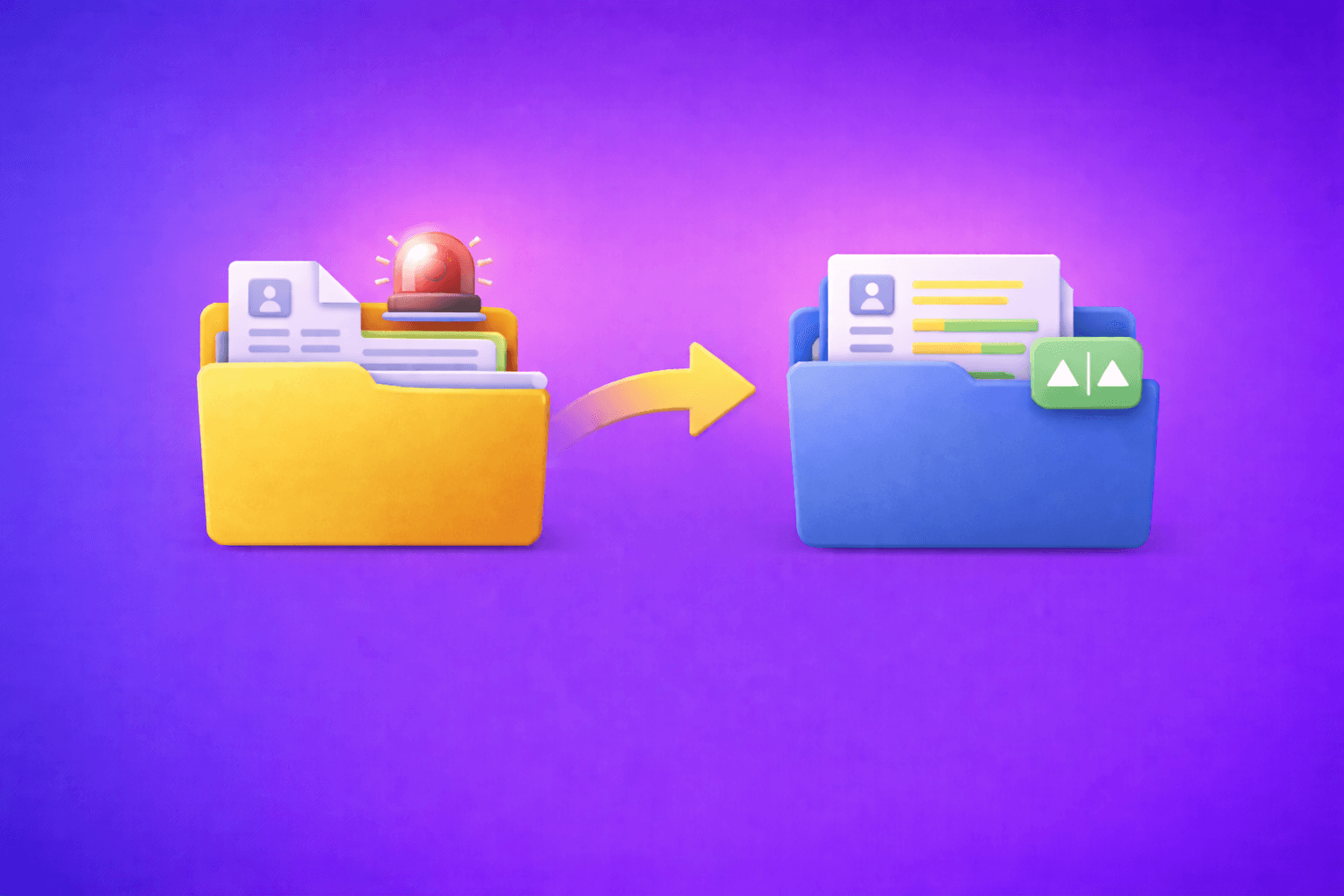
Sanctions screening systems must continuously compare customers, counterparties, and transactions against updated watchlists. Every time a sanctions list changes, organisations need to determine whether those changes create new potential matches within their existing customer base. Traditionally, many screening systems handled this by re screening entire datasets whenever new sanctions data arrived. While effective from a detection perspective, this approach often generates unnecessary alerts and creates significant operational workload for compliance teams.
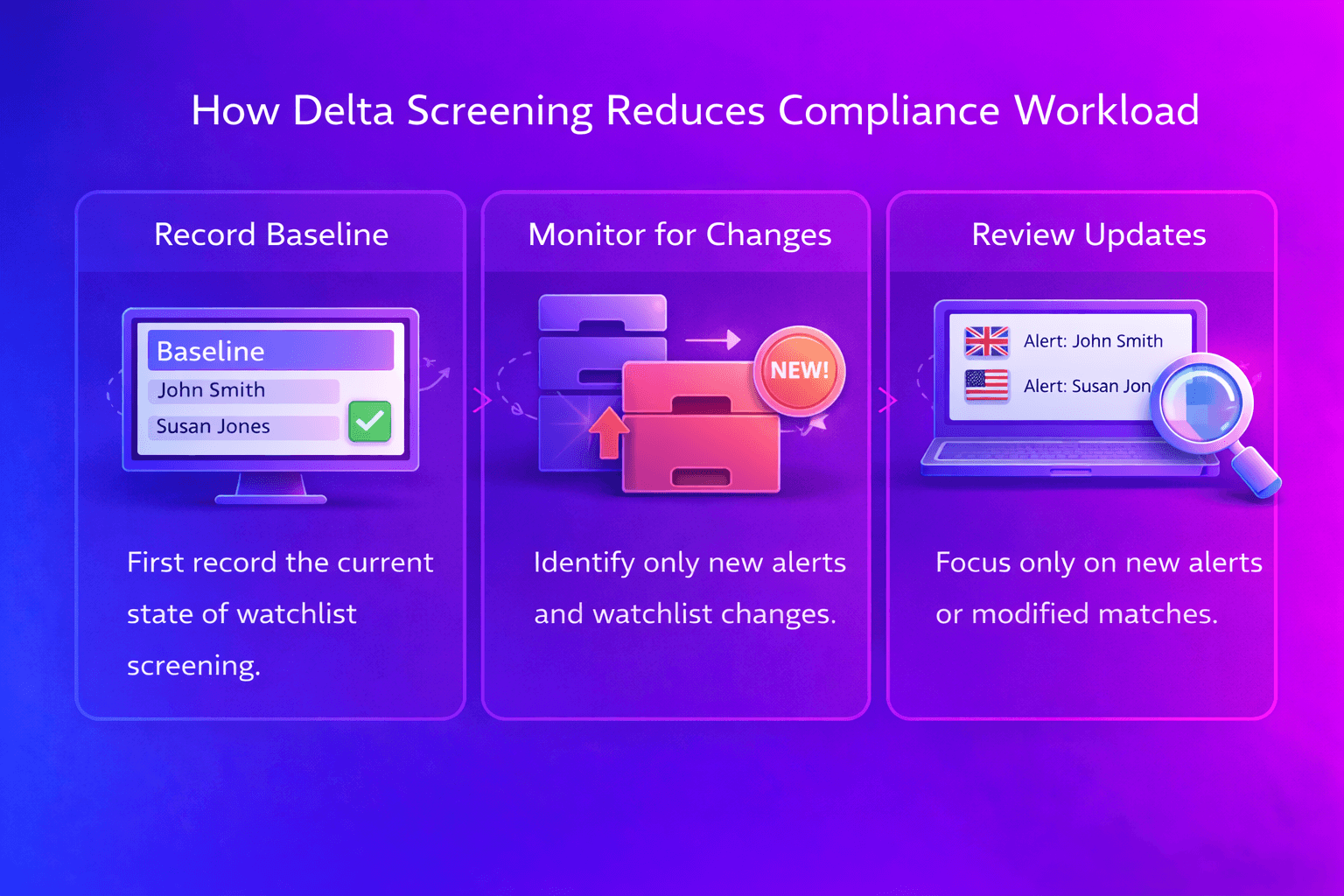
Delta screening offers a more efficient alternative. Instead of re screening every customer record whenever sanctions lists change, delta screening focuses only on the differences between the previous list and the updated list. By identifying only newly added or modified watchlist entries, screening systems can limit comparisons to the data that actually changed.
This targeted approach significantly reduces the number of alerts generated after list updates, allowing investigators to focus on genuinely new risks rather than repeatedly reviewing previously cleared matches.
Why Continuous List Updates Create Operational Pressure
Sanctions lists are updated frequently by regulators. New individuals and entities are added, identifying information is amended, and existing records may be modified to include new aliases or identifiers.
Authoritative sources such as the OFAC Specially Designated Nationals provide structured updates to sanctions data, allowing financial institutions to ingest changes into screening systems. However, when organisations re screen their entire customer population after every update, the operational impact can be substantial.
Large institutions may hold millions of customer records. Re screening all of them against updated lists can trigger thousands of alerts even when only a handful of list entries actually changed.
This creates investigation backlogs and reduces the efficiency of sanctions monitoring programmes.
What Delta Screening Means
Delta screening refers to a method of sanctions screening that evaluates only the changes between two versions of a watchlist.
Instead of comparing every customer against every watchlist entry, the system identifies the "delta" between the previous dataset and the updated dataset.
This delta typically includes:
• Newly added sanctioned individuals or entities
• Modified identifying information
• New aliases or identifiers
Screening systems then compare internal data only against these new or modified records.
This approach drastically reduces the volume of comparisons performed by the screening engine.
Where Delta Screening Fits In The Compliance Pipeline
Delta screening operates within the broader watchlist management and screening workflow.
Watchlist Update Detection
Sanctions data updates are first ingested through a structured watchlist management platform that collects regulatory list updates and prepares them for screening.
Change Identification
The system compares the latest list with the previous version to identify new or modified records.
Targeted Screening
Only these changed records are compared against the institution's customer population using customer screening systems.
Alert Investigation
If potential matches are detected, investigators review alerts within structured alert adjudication workflows to determine whether the match represents genuine sanctions exposure.
Because the system screens only incremental changes, investigators receive far fewer alerts than they would from full dataset re screening.
How Delta Screening Reduces Alert Volumes
The primary operational benefit of delta screening is a reduction in alert volume.
When a screening system re screens an entire customer base after every sanctions update, it often generates alerts for matches that investigators have already reviewed and cleared previously.
Delta screening avoids this repetition by focusing only on newly introduced risk signals.
This means investigators review alerts only when:
• A new sanctioned individual appears
• Identifying attributes change
• New aliases are added to existing sanctions records
By eliminating repeated alerts, delta screening significantly reduces investigation workload.
Additional Operational Benefits
Beyond reducing alert volumes, delta screening improves several other aspects of compliance operations.
Faster List Update Processing
Because the system processes smaller datasets, list updates can be evaluated more quickly.
Reduced Investigation Backlogs
Investigators receive fewer redundant alerts, allowing them to focus on higher risk cases.
Improved Analyst Productivity
Compliance teams spend less time reviewing previously cleared matches and more time investigating meaningful alerts.
More Predictable Workflows
Alert volumes become more stable because screening activity is linked directly to actual sanctions changes.
These improvements contribute to more efficient financial crime operations.
When Full Re Screening Is Still Necessary
While delta screening is highly effective, there are situations where full re screening may still be required.
Major Data Model Changes
If screening configuration or matching logic changes significantly, institutions may perform full re screening to ensure that historical records are evaluated under the updated rules.
Large Scale Data Corrections
When customer data quality improves significantly, organisations may run full screening to confirm that updated attributes do not create previously undetected matches.
Regulatory Expectations
Some institutions periodically perform full re screening as part of internal audit or control assurance programmes.
In practice, many organisations combine delta screening with occasional full re screening for validation purposes.
What Effective Delta Screening Implementation Looks Like
Organisations that successfully implement delta screening typically demonstrate several characteristics.
Accurate Watchlist Versioning
Systems maintain clear records of previous list versions so changes can be identified reliably.
Reliable Change Detection
Automated comparison processes detect additions, removals, and modifications across sanctions lists.
Strong Data Governance
Structured watchlist pipelines ensure list updates are processed consistently.
Integrated Investigation Workflows
Alerts generated from delta screening flow directly into investigation environments so analysts can review potential matches efficiently.
These practices ensure that delta screening improves operational efficiency without weakening detection capability.
Professional Insight And Operational Confidence
Delta screening is often one of the most impactful improvements organisations can make to their sanctions monitoring architecture. Compliance teams frequently discover that a large portion of their investigation workload is generated by repeated screening of unchanged data.
By focusing screening activity only on meaningful changes, delta screening allows institutions to maintain strong sanctions detection while dramatically reducing operational noise. This balance between detection and efficiency is essential for maintaining sustainable compliance operations.
Practical Experience
Compliance practitioners often observe immediate reductions in alert volumes after implementing delta screening.
Technical And Regulatory Expertise
Implementing delta screening requires careful data versioning and reliable change detection processes.
Building Confidence In Controls
When delta screening is implemented correctly, organisations maintain confidence that new sanctions risks are detected while investigators avoid reviewing the same alerts repeatedly.
People First Compliance Content
Financial crime compliance ultimately depends on investigators and analysts who review alerts and assess potential risks. Technology supports this process by identifying possible matches, but the effectiveness of the compliance framework depends on how efficiently investigators can focus on meaningful cases.
Educational resources like this aim to help compliance professionals understand how technical screening strategies can reduce operational workload while maintaining strong sanctions controls.
Next Steps For Your Organisation
Many organisations discover that adopting delta screening significantly improves the efficiency of their sanctions monitoring programmes. By focusing screening activity on genuine changes in sanctions data, compliance teams can reduce investigation backlogs and maintain more predictable operational workflows.
If your organisation is reviewing its screening architecture, explore how your screening processes compare with current industry practices.