AML Compliance


Financial Intelligence Units (FIUs) play a central role in the global fight against money laundering and terrorist financing. These national agencies receive suspicious activity reports from financial institutions, analyse financial intelligence, and share insights with law enforcement authorities and international partners.
Every country with a developed anti money laundering framework maintains an FIU responsible for collecting and analysing financial crime intelligence. For banks, fintech companies, payment providers, and other regulated institutions, these agencies represent the primary destination for suspicious activity reporting.
Understanding the structure and responsibilities of financial intelligence units is therefore essential for compliance professionals responsible for reporting suspicious transactions and cooperating with regulatory authorities.
This directory explains how FIUs operate, highlights several major financial intelligence units around the world, and describes how these organisations support global financial crime enforcement.
What Is A Financial Intelligence Unit
A Financial Intelligence Unit is a national authority responsible for receiving, analysing, and disseminating financial intelligence related to suspected money laundering or terrorist financing.
Financial institutions submit suspicious transaction reports to their national FIU whenever unusual activity suggests potential financial crime. The FIU then analyses these reports, identifies patterns or networks of suspicious activity, and shares relevant intelligence with law enforcement agencies.
Global cooperation between FIUs is supported by organisations such as the Egmont Group of Financial Intelligence Units, which provides a secure platform for information sharing between FIUs around the world.
Why FIUs Are Important For AML Compliance
Financial intelligence units act as the bridge between financial institutions and law enforcement agencies. Without FIUs, suspicious transaction reports would remain isolated within individual banks rather than contributing to broader investigations.
FIUs enable authorities to identify large scale money laundering networks by analysing reports from multiple institutions. Patterns that appear insignificant within a single bank may reveal major criminal activity when analysed across the financial system.
For compliance teams, reporting suspicious activity to FIUs is therefore a key regulatory obligation within AML frameworks.
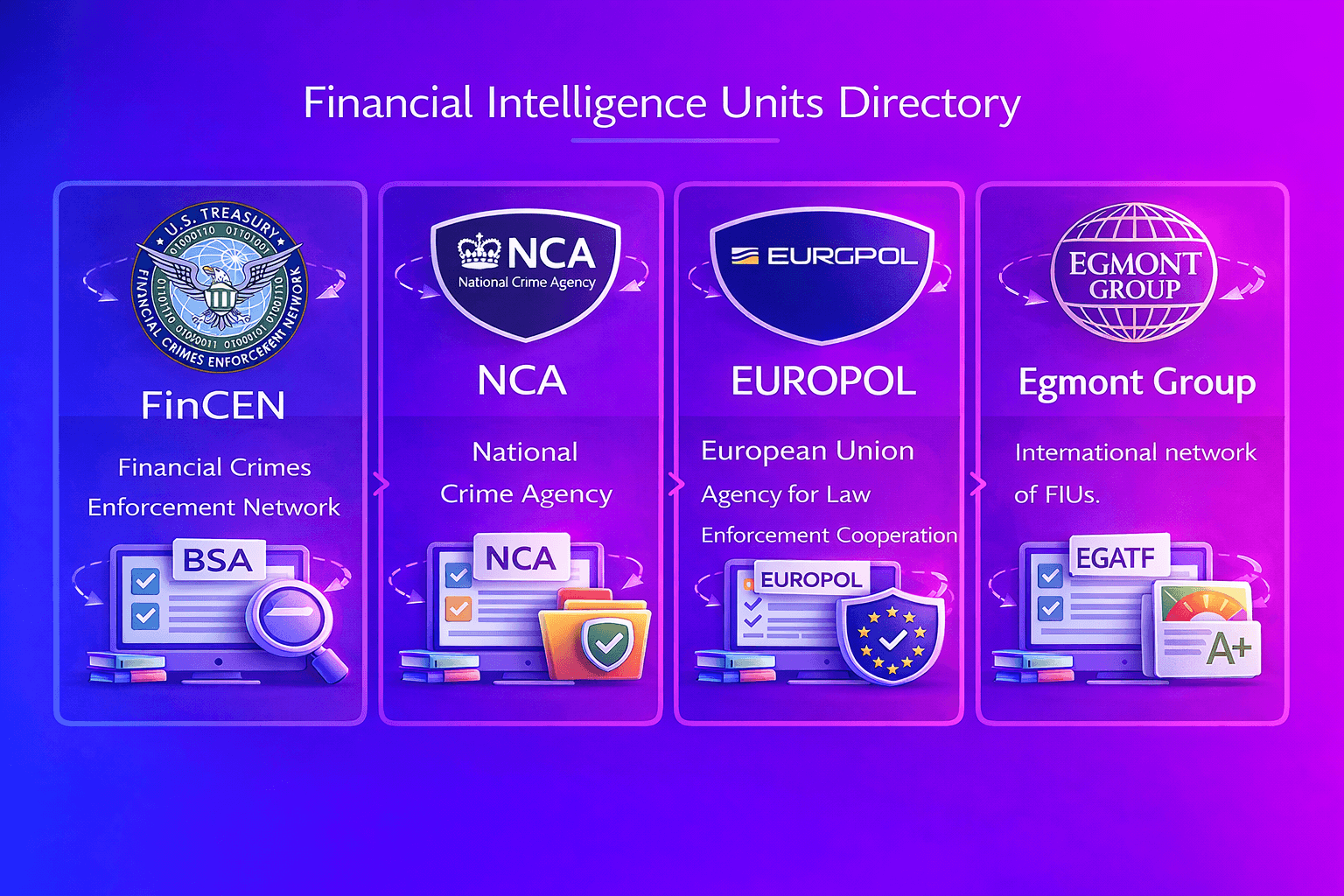
Major Financial Intelligence Units Around The World
While most countries maintain an FIU, several agencies play particularly prominent roles in global financial intelligence cooperation.
United States - FinCEN
The United States Financial Intelligence Unit is the Financial Crimes Enforcement Network. FinCEN collects suspicious activity reports from financial institutions and analyses financial intelligence related to money laundering, sanctions violations, and other financial crimes.
United Kingdom - UKFIU
The United Kingdom Financial Intelligence Unit operates within the National Crime Agency and receives suspicious activity reports submitted by financial institutions across the UK.
Australia - AUSTRAC
Australia’s FIU is the Australian Transaction Reports and Analysis Centre. AUSTRAC functions both as a financial intelligence unit and as the national AML regulator responsible for supervising compliance programmes.
European Union - FIU Network
European Union member states maintain individual FIUs that cooperate through the EU FIU network. This collaboration allows authorities across Europe to exchange intelligence relating to cross border financial crime.
Singapore - STRO
Singapore’s Suspicious Transaction Reporting Office operates as the country’s financial intelligence unit and is responsible for analysing suspicious transaction reports submitted by regulated institutions.
How Financial Institutions Interact With FIUs
Financial institutions interact with FIUs primarily through suspicious activity reporting obligations.
Suspicious Activity Reporting
When unusual financial behaviour is detected, institutions must submit a report to their national FIU describing the activity and the reasons it appears suspicious.
Regulatory Cooperation
FIUs may request additional information from institutions when investigating potential financial crime.
Intelligence Sharing
Information submitted to FIUs may contribute to broader investigations involving multiple institutions or jurisdictions.
Reliable detection systems such as customer screening platforms and structured investigation processes supported by alert adjudication workflows help institutions identify suspicious behaviour that may need to be reported.
Operational Challenges In FIU Reporting
Compliance teams responsible for submitting suspicious activity reports often encounter several operational challenges.
High Alert Volumes
Large institutions generate significant numbers of alerts that investigators must review before determining whether a report should be filed.
Reporting Thresholds
Different jurisdictions define suspicious activity reporting thresholds differently.
Documentation Requirements
FIUs expect institutions to provide detailed explanations supporting each report.
Cross Border Coordination
International institutions must manage reporting obligations across multiple FIUs.
Addressing these challenges requires structured investigation workflows and clear reporting procedures.
What Effective FIU Reporting Looks Like
Organisations that manage suspicious activity reporting effectively typically demonstrate several characteristics.
Structured Investigation Processes
Investigators follow consistent procedures when reviewing alerts.
Clear Documentation
Investigation decisions and supporting evidence are recorded clearly.
Strong Governance
Compliance teams maintain oversight of reporting decisions and regulatory obligations.
Reliable Detection Systems
Screening and monitoring systems identify suspicious activity efficiently so investigators can focus on meaningful alerts.
These practices help institutions maintain strong relationships with financial intelligence authorities.
Professional Insight And Operational Confidence
Financial intelligence units form the backbone of global AML enforcement. Their ability to analyse suspicious transaction reports and connect intelligence across institutions allows authorities to detect complex financial crime networks.
For financial institutions, effective cooperation with FIUs is a critical component of a well functioning AML programme. Organisations that maintain reliable detection systems, structured investigation procedures, and clear reporting governance are better positioned to meet regulatory expectations.
Practical Experience
Compliance professionals often find that strong internal investigation processes significantly improve the quality of suspicious activity reports submitted to FIUs.
Technical And Regulatory Expertise
Understanding the reporting expectations of national FIUs helps institutions ensure that their AML programmes meet regulatory standards.
Building Confidence In Controls
When suspicious activity reporting processes operate effectively, institutions can demonstrate that they contribute meaningfully to the detection and prevention of financial crime.
People First Compliance Content
Financial crime compliance ultimately depends on investigators who analyse alerts and identify suspicious behaviour. Technology assists by identifying potential risks, but human expertise remains essential when determining whether activity should be reported to financial intelligence authorities.
Educational resources like this aim to support compliance professionals by explaining how financial intelligence units operate within global AML frameworks.
Next Steps For Your Organisation
Understanding the role of financial intelligence units helps organisations design more effective reporting processes and maintain strong relationships with regulatory authorities.
If your organisation is reviewing its suspicious activity reporting procedures or investigation workflows, explore how your reporting framework compares with current industry practices.