Solutions

Platform

Industries

Resources

Company

Solutions

Platform

Industries

Resources

Company

Solutions

Industries

Resources

Company

Platform

Solutions

Platform

Industries

Resources

Company

AML Compliance

Common False Positives in Sanctions Screening and How to Reduce Them

Common False Positives in Sanctions Screening and How to Reduce Them

Common False Positives in Sanctions Screening and How to Reduce Them

Alex Rees

Alex Rees

Alex Rees

27 Jan 2026

27 Jan 2026

27 Jan 2026

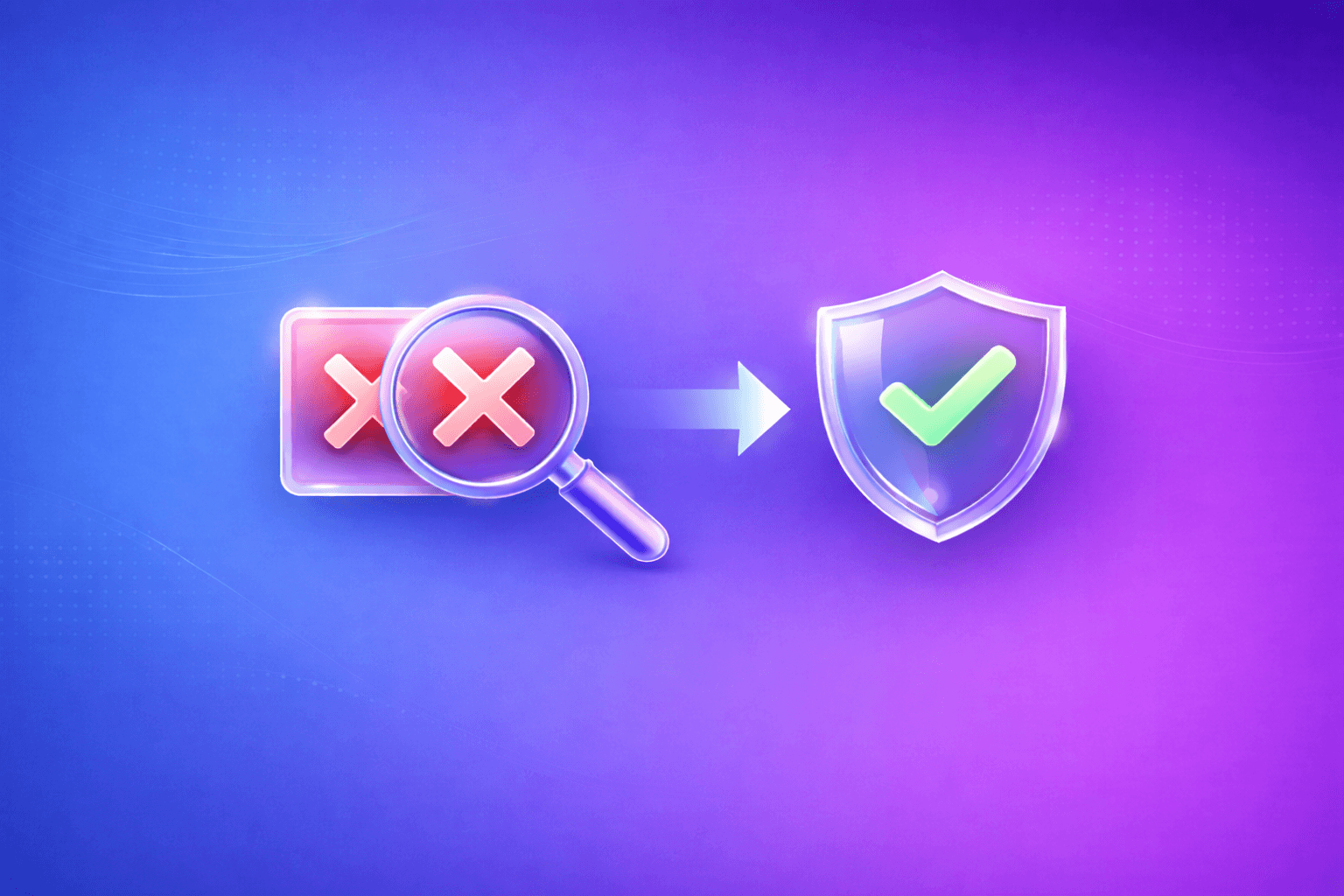
Customer screening fintech illustration with magnifying glass icon on blue to purple gradient background, representing AML compliance, real-time risk assessment, and identity verification for financial institutions.

Sanctions screening is a cornerstone of compliance, ensuring organisations identify individuals or entities subject to international restrictions. However, one of the most persistent challenges is the occurrence of false positives, matches flagged by screening systems that turn out not to be true sanctions hits.

False positives increase workloads, slow down processes, and strain compliance teams. For financial institutions and regulated firms, reducing these errors is critical to improving efficiency while staying aligned with regulatory expectations.

Why False Positives Happen in Sanctions Screening

False positives occur when a screening system flags a match that is not genuinely linked to a sanctions list entry. These are often the result of name similarities, transliteration differences, or incomplete data.

The Financial Action Task Force (FATF) emphasises that countries should assist the private sector in identifying false positives, such as those caused by common names or ambiguous identifiers, because these result in inefficiencies and burden compliance efforts. Regulators expect firms to strike a balance between effective detection and operational efficiency.

Common Causes of False Positives

False positives arise from several recurring factors. Understanding these helps compliance teams identify where improvements are needed.

Name Variations and Common Names

Names like “Mohammed,” “Lee,” or “Patel” are extremely common. Screening tools often struggle to distinguish between ordinary individuals and sanctioned persons.

Transliteration Differences

Names written in different alphabets, such as Cyrillic or Arabic, can be transliterated in multiple ways, creating duplicate or mismatched records.

Incomplete or Outdated Data

Sanctions lists and internal customer data may not be updated in real time. Inconsistent or missing identifiers such as date of birth or nationality can increase false alerts.

Fuzzy Matching Issues

While fuzzy matching is necessary to catch near matches, poorly tuned thresholds can trigger excessive false positives, particularly when combined with common names.

Generic Screening Rules

Overly broad rules that lack contextual filtering may flag legitimate transactions or customers as potential sanctions matches.

The Compliance Impact of False Positives

High volumes of false positives are more than just an operational burden. They slow down compliance reviews, delay legitimate transactions, and significantly increase costs. Compliance professionals frequently experience alert fatigue due to the volume of low-quality alerts and false positives, which undermines effectiveness and increases the risk of compliance failures

Striking the right balance between detection and efficiency is therefore a regulatory expectation as well as a business necessity.

How to Reduce False Positives in Sanctions Screening

Compliance teams can take practical steps to lower false positives while maintaining strong detection standards.

Improve Data Quality

Ensuring that customer data includes complete identifiers, such as full names, dates of birth, and nationalities, helps reduce spurious matches.

Use Advanced Matching Techniques

Modern screening solutions apply AI and natural language processing to distinguish between genuine hits and unrelated names. These techniques help refine matching beyond traditional fuzzy logic.

Apply Contextual Filters

Geographic and sector-based filters reduce irrelevant matches by focusing only on contexts where sanctions restrictions are relevant.

Continuously Tune Thresholds

Thresholds should be regularly reviewed and adjusted. Overly strict thresholds may create inefficiencies, while overly loose ones risk missing true matches.

Monitor Performance and Feedback

Feedback loops, where analysts review patterns in false positives, help fine-tune systems over time and improve long-term accuracy.

Leveraging Technology for Greater Accuracy

Technology plays a central role in reducing false positives. Secure-by-design solutions like FacctList, Watchlist Management provide reliable data management, while Alert Adjudication helps compliance teams resolve alerts quickly and accurately. Combining high-quality data with intelligent adjudication reduces false positives without compromising compliance integrity.

Final Thoughts

False positives are one of the most persistent challenges in sanctions screening. While they cannot be eliminated entirely, they can be significantly reduced with the right data, processes, and technology. Striking this balance improves efficiency, protects customers, and ensures regulatory compliance.

Reduce False Positives with Facctum’s Screening Solutions

Facctum’s FacctList, Watchlist Management and Alert Adjudication solutions are built to improve sanctions screening accuracy and reduce false positives. With advanced data management and intelligent adjudication, they help compliance teams work faster while maintaining regulatory standards.

👉 Contact Facctum today to learn how Facctum’s solutions reduce false positives in sanctions screening.

Contact us

Explore Our Solutions

Watchlist Management

Customer Screening

Payment Screening

Alert Adjudication

Transaction Monitoring

Contact us

Explore Our Solutions

Watchlist Management

Customer Screening

Payment Screening

Alert Adjudication

Transaction Monitoring

FAQs About False Positives in Sanctions Screening

FAQs About False Positives in Sanctions Screening

What Are False Positives In Sanctions Screening?

What Are False Positives In Sanctions Screening?

What Are False Positives In Sanctions Screening?

What Are False Positives In Sanctions Screening?

Why Do False Positives Occur So Frequently In Sanctions Screening?

Why Do False Positives Occur So Frequently In Sanctions Screening?

Why Do False Positives Occur So Frequently In Sanctions Screening?

Why Do False Positives Occur So Frequently In Sanctions Screening?

How Do False Positives Impact Compliance Operations?

How Do False Positives Impact Compliance Operations?

How Do False Positives Impact Compliance Operations?

How Do False Positives Impact Compliance Operations?

What Are The Most Common Causes Of False Positives?

What Are The Most Common Causes Of False Positives?

What Are The Most Common Causes Of False Positives?

What Are The Most Common Causes Of False Positives?

How Can Data Quality Help Reduce False Positives?

How Can Data Quality Help Reduce False Positives?

How Can Data Quality Help Reduce False Positives?

How Can Data Quality Help Reduce False Positives?

What Role Does Fuzzy Matching Play In False Positives?

What Role Does Fuzzy Matching Play In False Positives?

What Role Does Fuzzy Matching Play In False Positives?

What Role Does Fuzzy Matching Play In False Positives?

How Can Contextual Filters Improve Screening Accuracy?

How Can Contextual Filters Improve Screening Accuracy?

How Can Contextual Filters Improve Screening Accuracy?

How Can Contextual Filters Improve Screening Accuracy?

Why Is Threshold Tuning Important For Sanctions Screening?

Why Is Threshold Tuning Important For Sanctions Screening?

Why Is Threshold Tuning Important For Sanctions Screening?

Why Is Threshold Tuning Important For Sanctions Screening?

How Does Technology Help Reduce False Positives?

How Does Technology Help Reduce False Positives?

How Does Technology Help Reduce False Positives?

How Does Technology Help Reduce False Positives?

What Are The Long-Term Benefits Of Reducing False Positives?

What Are The Long-Term Benefits Of Reducing False Positives?

What Are The Long-Term Benefits Of Reducing False Positives?

What Are The Long-Term Benefits Of Reducing False Positives?

Explore our compliance solutions

Reach out to us for more information! 

Request a Demo

Explore our compliance solutions

Reach out to us for more information! 

Request a Demo

Explore our compliance solutions

Reach out to us for more information! 

Request a Demo

Explore our compliance solutions

Reach out to us for more information! 

Request a Demo

Explore our compliance solutions

Reach out to us for more information! 

Request a Demo

Explore our compliance solutions

Reach out to us for more information! 

Request a Demo

Explore Our Comprehensive Platform

Explore the powerful capabilities of the Facctum Compliance Platform

Explore Our Comprehensive Platform

Explore the powerful capabilities of the Facctum Compliance Platform

Explore Our Comprehensive Platform

Explore the powerful capabilities of the Facctum Compliance Platform

Explore Our Comprehensive Platform

Explore the powerful capabilities of the Facctum Compliance Platform

How Facctum Solves the
Biggest Compliance and
Screening Challenges

Explore the powerful capabilities of the Facctum

Compliance Platform

Explore Our Comprehensive Platform

Explore the powerful capabilities of the Facctum Compliance Platform

Explore Our Comprehensive Platform

Explore the powerful capabilities of the Facctum Compliance Platform

Explore Our Comprehensive Platform

Explore the powerful capabilities of the Facctum Compliance Platform

Protect against compliance failings, and transact with confidence. 

Book a demo to find out more.

Contact Details

Privacy Policy

Protect against compliance failings, and transact with confidence. 

Book a demo to find out more.

Contact Details

Privacy Policy

Protect against compliance failings, and transact with confidence. 

Book a demo to find out more.

Contact Details

Privacy Policy

Protect against compliance failings, and transact with confidence. 

Book a demo to find out more.

Contact Details

Privacy Policy

Protect against compliance failings, and transact with confidence. 

Book a demo to find out more.

Contact Details

Privacy Policy

Protect against compliance failings, and transact with confidence. 

Book a demo to find out more.

Contact Details

Privacy Policy

Protect against compliance failings, and transact with confidence. 

Book a demo to find out more.

Contact Details

Privacy Policy

Protect against compliance failings, and transact with confidence. 

Book a demo to find out more.

Contact Details

Privacy Policy

Frequently Asked Questions (FAQs)

What Are False Positives In Sanctions Screening?

What Are False Positives In Sanctions Screening?

Why Do False Positives Occur So Frequently In Sanctions Screening?

Why Do False Positives Occur So Frequently In Sanctions Screening?

How Do False Positives Impact Compliance Operations?

How Do False Positives Impact Compliance Operations?

What Are The Most Common Causes Of False Positives?

What Are The Most Common Causes Of False Positives?

How Can Data Quality Help Reduce False Positives?

How Can Data Quality Help Reduce False Positives?

What Role Does Fuzzy Matching Play In False Positives?

What Role Does Fuzzy Matching Play In False Positives?

How Can Contextual Filters Improve Screening Accuracy?

How Can Contextual Filters Improve Screening Accuracy?

Why Is Threshold Tuning Important For Sanctions Screening?

Why Is Threshold Tuning Important For Sanctions Screening?

How Does Technology Help Reduce False Positives?

How Does Technology Help Reduce False Positives?

What Are The Long-Term Benefits Of Reducing False Positives?

What Are The Long-Term Benefits Of Reducing False Positives?